 Arlington, VA
 Medical
Giorgio Greco
This campaign has ended and is no longer accepting donations.
Aldo's Medical Bills
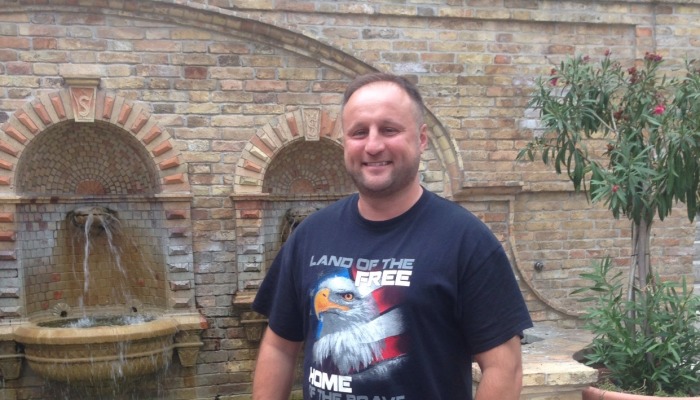
Everything started in 1988 in Naples, Italy. I was a 14 year old boy playing on the street while all of the sudden I collapsed... luckily a local Police officer happen to be passing by and noticed my dog barking and saw me on the ground as I was turning blue. It was pretty much a sudden death. They rushed me to the hospital and I was pronounced dead in my mom's arms. But for some miracle there was a faint beating of my heart as they had applied heavily a defibrillator on my chest. Subsequently, I spent three days in a comma at the hospital, and the doctors told my family I had zero chance to fully recover and if I did my brain would not and I would be left, what we call back home a vegetable for the rest of my life.
I spent weeks on end with a breathing machine with my family by my side. On my supposed last day, my mom grabbed my hand and spoke in my ear ‘Aldo if you feel my touch, please I beg you to move any part of you! I could not move at all and I recall that I was so helpless…and for some strange reason that only powers beyond me could explain…after putting all my energy and effort, I moved a finger. My mom immediately stopped the doctor from unplugging the machine and begged to keep me alive…It is truly a miracle I woke up and after a few weeks was able to move in a wheelchair, but they said I wouldn't be able to walk ever again much less play soccer ever again…And so we asked, if they would operate on my heart and they responded with a convincing NO. It so happen that I have a very rare condition which is called Sudden unexpected death syndrome (SUDS) or the medical term of Hypertrophic Cardiomyopathy and back home in Italy, it wasn't treatable and even if they could, none of the doctors or hospitals wanted to take on my case. My parents fought day and night with the hospitals until they began to investigate elsewhere outside Italy. They did everything to come to the U.S. where they found the proper treatment. Shortly after arriving and visiting specialists- they said to my parents they don't know how your son survived the pressure from flying on a plane overseas, and the first procedure that followed was to implant a defibrillator and pacemaker in my heart. The risk was very high and after an 18 hour open heart operation, and a second 15 hour operation, I came out with a number of complications but still I made it through.
The recovery was long and hard and every ten years I have to do maintenance on my devices. I recall one time when the pacemaker and the defibrillator cost was $160,000. Then, there is the expense of changing the batteries every other year and additional surgeries. My family has worked so hard to help me pay the bills but it's become exceedingly more expensive and has overburdened my entire family. We asked if we could do a heart transplant but that also is very expensive and risky. One of the effects of my condition is loss of memory, so I have damage in my brain, where I cannot recall fond memories of my childhood.
And so, I've been living this life working hard making enough money to pay the hospital bills. They continue to come in and are getting ever more expensive. Unfortunately, it is considered a pre-condition and the insurance companies don't cover a lot of my procedures. Every time I go for a check-up, I get a huge bill.
I also just want to say that thanks to my parents for if it wasn't for them, I wouldn't be alive today, and I can't never thank them enough. I'm 41 today and they have dedicated their whole life taking care of me. God is powerful and has blessed me and my family with many miracles over the years. Now my parents are retired and I'm single with no kids, and have to take care of all my financial and medical needs.
So this is my story, and I tell it not to make you feel sorry for me, but to encourage you to change someone's life, so I can live another day, as my parents did for me.
I'm collecting donations of $----- through this FreeFunder website. Could you be kind and from one healthy heart to a non-healthy heart give what you can, so I can live without the stress of worrying how I can pay that next bill, and instead worry about living another day.
Cardiomiopatia hypertrophica ostruttiva
What is cardiomyopathy?
Cardiomyopathy is diseased heart muscle that cannot function (contract) adequately. Cardiomyopathy results in the failure of the heart muscle to meet the needs of the body for oxygen rich blood and removal of carbon dioxide and other waste products. There are many causes of cardiomyopathy, but the end result is a heart that is weak and cannot maintain a normal ejection fraction or cardiac output.
How does the heart function?
The heart is an electrically-innervated, muscular pump that pushes blood throughout the body through blood vessels. A specialized group of cells located in the upper chamber (atrium) of the heart, acts as a pacemaker that generates an electrical impulse. This impulse begins a sequential electrical stimulation of heart muscle that then contracts in a coordinated way. Accordingly, first the upper chamber of the heart is stimulated to contract and send blood into the lower chambers (ventricles) of the heart. There is a slight delay in the electrical signal that allows the ventricles to fill. Then the ventricles contract pumping blood throughout the body. Another slight delay then occurs, allowing blood to return to the upper chambers of the heart, refilling the heart for the next cycle.
Cardiac output is a measurement of heart function that measures the amount of blood that the heart pumps in a specific period of time.
The stroke volume is the amount of blood that the heart pumps with one contraction.
The stroke volume multiplied by the number of heart beats per minute is the cardiac output.
Normally, the adult heart pumps about 5 liters of blood through the blood vessels of the body every minute.
The ejection fraction is a measurement of the heart's effectiveness in pumping blood. It is the percentage of blood in a filled ventricle that is pumped out of the heart with each contraction. A normal heart will have an ejection fraction of 60%-70%. This number can decrease if the heart muscle cannot squeeze or contract adequately.
Chest pain
Causes
Hypertrophic cardiomyopathy is usually caused by abnormal genes (gene mutations) that cause the heart muscle to grow abnormally thick. People with hypertrophic cardiomyopathy also have an abnormal arrangement of heart muscle cells, a condition known as myofiber disarray. This disarray can contribute to arrhythmia in some people.
The severity of hypertrophic cardiomyopathy varies widely. Most people with hypertrophic cardiomyopathy have a form of the disease in which the wall (septum) between the two bottom chambers of the heart (ventricles) becomes enlarged and impedes blood flow out of the heart. This condition is sometimes called obstructive hypertrophic cardiomyopathy.
Sometimes hypertrophic cardiomyopathy occurs without significant blocking of blood flow. However, the heart's main pumping chamber (left ventricle) may become stiff, reducing the amount of blood the ventricle can hold and the amount pumped out to the body with each heartbeat. This condition is sometimes called nonobstructive hypertrophic cardiomyopathy.
Risk factors
Hypertrophic cardiomyopathy is usually inherited. There's a 50 percent chance that the children of a parent with hypertrophic cardiomyopathy will inherit the genetic mutation for the disease. Close relatives — parents, children or siblings — of a person with hypertrophic cardiomyopathy should ask their doctors about screening for the disease.
Complications
Many people with hypertrophic cardiomyopathy (HCM) don't experience significant health problems. But some people experience complications, including:
Arrhythmias. Thickened heart muscle, as well as the abnormal structure of heart cells, can disrupt the normal functioning of the heart's electrical system, resulting in fast or irregular heartbeats. Atrial fibrillation, ventricular tachycardia and ventricular fibrillation are among the arrhythmias that may be caused by hypertrophic cardiomyopathy. Atrial fibrillation can also increase your risk of developing blood clots, which can travel to your brain and cause a stroke.
Obstructed blood flow. In many people, the thickened heart muscle obstructs the blood flow leaving the heart. Obstructed blood flow can cause shortness of breath with exertion, chest pain, dizziness and fainting spells.
Dilated cardiomyopathy. Over time, thickened heart muscle may become weak and ineffective in a very small percentage of people with HCM. The ventricle becomes enlarged (dilated), and its pumping ability becomes less forceful.
Mitral valve problems. The thickened heart muscle can leave a smaller space for blood to flow, causing blood to rush through your heart valves more quickly and forcefully. This increased force can prevent the valve between your heart's left atrium and left ventricle (mitral valve) from closing properly. As a result, blood can leak backward into the left atrium (mitral valve regurgitation), possibly leading to worsening symptoms.
Heart failure. The thickened heart muscle can eventually become too stiff to effectively fill with blood. As a result, your heart can't pump enough blood to meet your body's needs.
Sudden cardiac death. Ventricular tachycardia and ventricular fibrillation can cause sudden cardiac death. People with hypertrophic cardiomyopathy have an increased risk of sudden cardiac death, although such deaths are rare. Sudden cardiac death is estimated to occur in about 1 percent of HCM patients each year. Hypertrophic cardiomyopathy can cause heart-related sudden death in people of all ages, but the condition most often causes sudden cardiac death in people under the age of 30.
Much love and thanks always to all my family and friends for all your support.
I also encourage you to share my story with your family and friends.
GOD BLESS YOU!
Romualdo (Aldo) Ciotola
Did you know?
Even if you can't contribute with money, you can help this campaign by sharing on Facebook! In fact, when this campaign reaches 100 shares on Facebook and $1000 raised, FreeFunder will donate $20 to it. Tell your friends! Currently this campaign has been shared on Facebook about 44 times.
FreeFunder allows fundraisers to create free personal crowdfunding campaigns, with no platform fees!