 Arcadia, MO
 Weddings
Private
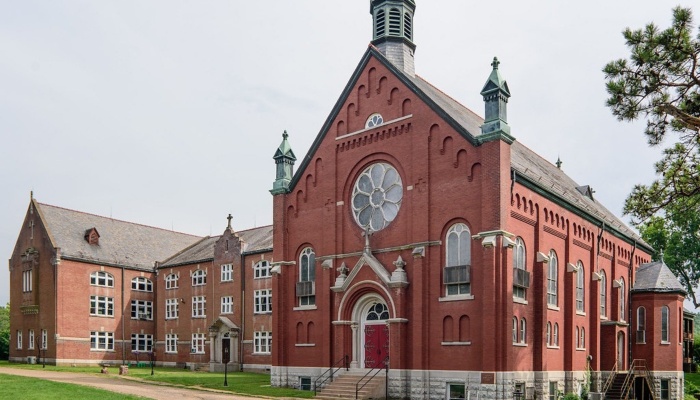
Saint Joseph's Chapel
Reviving the Arcadia Academy aka Ursuline Academy Saint Joseph's Chapel: A Fundraiser for Restoration and Upgrades
We cordially invite you to be a part of the Arcadia Academy aka Ursuline Academy Saint Joseph's Chapel Restoration Fundraiser, an exciting initiative aimed at revitalizing the historic Ursuline Academy Chapel. This project aims to preserve the cultural and artistic heritage of our community by restoring the chapel's key elements, including the amazing stained glass windows, roof, air conditioning system and carpet. By supporting this fundraiser, you will contribute to the creation of a vibrant and modern venue for weddings and vow renewals that will benefit generations to come.
Venue: Arcadia Academy aka Ursuline Academy Saint joseph's Chapel, Arcadia Missouri 63621
Fundraising Goals:
Our primary goal is to raise sufficient funds to restore the Arcadia Academy. The estimated cost of the restoration and upgrades is $200,000.00. We encourage individuals, businesses, and organizations to contribute generously to help us reach this target.
Impact and Benefits:
The restoration of the Saint Joseph's Chapel will have numerous positive impacts on the community, including:
- Preserving a historic cultural landmark.
- Creating opportunities for educational programs and events for local students.
- Boosting cultural tourism and attracting visitors to the area.
- Enriching the community's quality of life by fostering future weddings, vow renewals and maybe future Latin Mass.
Traditionally, Catholic churches are built in the shape of a cross, the principal symbol of Christianity. You may not realize this until you view the church from the sky.
Upon entering the church, you'll usually encounter the vestibule. This is a spacious area where bulletin announcements, literature, pamphlets, and other church information are found. It is also a place where holy water can be accessed by the worshippers.
Next to the vestibule is the narthex or the gathering area where the worshippers greet each other before and after the Mass. The narthex is the space between the outside doors and inner doors of the church. It is also here where the faithful form lines for processions.
At the east end of the Church is the sanctuary, which is considered the holiest part of the church. Catholics believe that this is the part of the church where God's physical presence can be felt. The word sanctuary comes from the Latin word sanctuarium, which means a place for keeping something in.
The altar is at the center of the sanctuary. It is a table where bread and wine are blessed by the priest during the Eucharistic celebration. It also serves as the focus of attention in the church.
The word altar comes from a Hebrew word which means a place of sacrifice.' The truth is that altars have been used in religious activities even before the Catholic church was built. During the early years of the Catholic church, the altars were built on the sites of graves of martyrs. As more churches were eventually built, the relics of holy men and martyrs were buried under the altars.
Meanwhile, the lectern is another part of the sanctuary. It is a stand where the Bible is read from. It is usually a movable reading desk made of metal and wood. It is also called the cantor's stand.
The raised stand or spot where the priest delivers his sermon is called the pulpit. It comes from the Latin word pulpitum, which means platform or staging. The traditional pulpit is raised high above the ground for enhanced audibility and visibility. It can be accessed by steps. During the medieval period, pulpits featured a sounding board or tester. It is not only for decorative purposes but also to improve the projection of the priest to the rest of the congregation. Pulpits also have book-stands where the priest can rest his bible or notes.
The last part of the sanctuary is the crucifix or the cross with the image or figure of a crucified Jesus is placed on. The crucifix is usually located or affixed on the wall and above the altar.
Aside from the sanctuary, there are also other parts of a Catholic church that you may be familiar with.
The tabernacle is a fixed and locked box that's a familiar fixture not only in Catholic churches but also in Anglican churches. It is often made from stone or precious metals. It is used as a resting place for consecrated hosts. The word tabernacle is derived from the Old Testament and references the position of God's presence among His people. It is also a tradition for the tabernacle to have a veil or curtains across its doors whenever there is a Eucharist within it.
The nave is the rail that serves to separate the sanctuary from the area where the worshippers sit. It is derived from the Latin word navis, which means ship. It includes the central and open spaces of the church, including the west side where the choir is usually located. It may also include the central and side aisles.
It is in the nave that the rows of pews are found. A pew is simply a long bench seat for seating members of a congregation. Interestingly, the pew is a recent addition to the Catholic church as it was first introduced in Protestant churches, where the sermon of the pastor was usually long. This brought the need for worshippers to sit down.
Around the nave are 14 framed pictures or the Stations of the Cross. These images depict the events of Jesus' crucifixion. These are usually small plaques with paintings, although more modern churches have simple crosses with a numeral in the center.
There are other features or parts of a Catholic church, such as the font or the large stone bowl that contains holy water for baptizing babies. The stoup is the small basin containing holy water and placed in strategic parts of the church. Catholics dip their hand in the stoup to make the sign of the cross. Also, most Catholic churches have a confessional or small enclosed space or cabinet where worshippers can confess their sins to a priest.
Join us in this noble cause to revive the Chapel. Your support will make a lasting difference and contribute to the preservation of our cultural heritage. Together, we can create a vibrant and inspiring space that will captivate audiences for years to come.
Darla Buechner, Co Owner

Did you know?
Even if you can't contribute with money, you can help this campaign by sharing on Facebook! In fact, when this campaign reaches 100 shares on Facebook and $1000 raised, FreeFunder will donate $20 to it. Tell your friends! Currently this campaign has been shared on Facebook about 4 times.
FreeFunder allows fundraisers to create free personal crowdfunding campaigns, with no platform fees!